


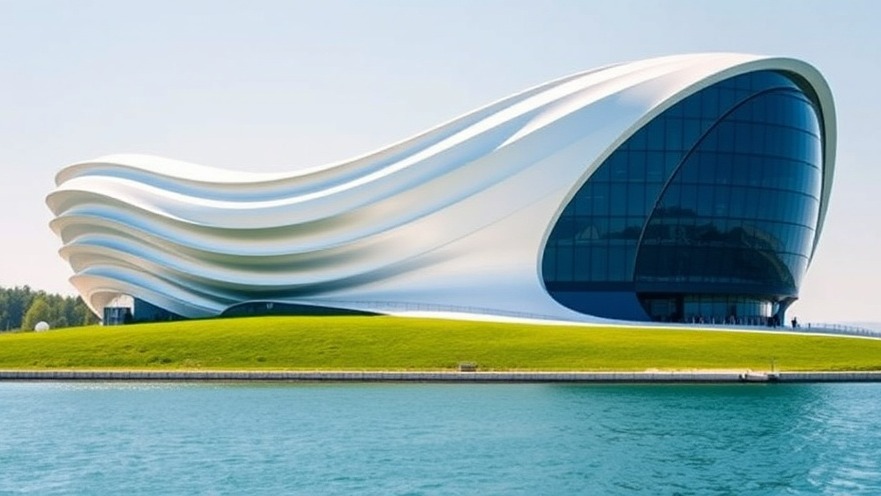
The Grandeur of the Théâtre Royal de Rabat: A New Cultural Landmark
In an age where the fusion of functionality and artistry is paramount, the Théâtre Royal de Rabat stands as a beacon of innovation in Moroccan architecture. Designed by the renowned Zaha Hadid Architects (ZHA), this national theatre is more than just a performance space; it is an experience tailored for various forms of artistic expression. Set between Rabat and Salé, alongside the majestic Mohammed VI Tower, this venue is packed with features that reflect the cultural richness of Morocco.
Design Inspiration: A Fusion of Nature and Tradition
The building's design takes inspiration from the immediate landscape, particularly the Bouregreg River that flows nearby. ZHA's founder, Zaha Hadid, advocated for a “secular” space that transcends mere architecture, aiming instead to create an environment that evokes imagination and creativity—a philosophy that resonates deeply with artists and audiences alike. The auditorium’s walls, adorned with faceted surfaces mimicking muqarnas—traditional three-dimensional ornamentation in Islamic art—are not merely aesthetic but also serve as crucial acoustic elements. This careful approach ensures that sound quality is maximized, providing an immersive listening experience.
Flexible Spaces for Diverse Performances
One of the standout features of the Théâtre Royal de Rabat is its versatile performance spaces. The main auditorium, capable of hosting 1,821 patrons, is complemented by the Studio Theatre, which accommodates 250 people and can be configured for various uses—from experimental performances to educational workshops. The private, adaptable nature of the Studio Theatre encourages exploration and innovation among artists, making it an ideal venue for creators wishing to push the boundaries of performance art. Lastly, the Amphitheatre's capacity for 7,000 spectators allows for grand public events, fostering a sense of community engagement and collective experience that is essential in today’s cultural landscape.
Eco-Friendly Features and Modern Technology
Incorporating sustainable practices, the design includes air-source heat pumps and ground-source cooling systems, ensuring an environmentally responsible approach to building operations. This focus on sustainability extends to practical design features, such as a rainwater collection system for landscaping and restroom facilities. These features not only enhance the building’s eco-friendliness but also set a precedent for future architectural endeavors in Morocco and beyond.
A Space for Reflection and Connection
The building's triple-height foyer, likened to a canyon, is designed to encourage social interaction and curiosity. This transitional space fosters an atmosphere where ideas can flourish, pre-performance discussions can begin, and a sense of community can develop. As more digital nomads seek flexible spaces to work and create, venues like the Théâtre Royal de Rabat offer creative inspiration and a setting where ideas flow freely, making it an ideal place for both performances and collaborative projects.
Cultural Implications and Future Prospects
The grand opening of the Théâtre Royal de Rabat marks a significant moment in Morocco's cultural tapestry. This venue not only enhances the architectural landscape but also promises to invigorate the local arts scene. The collaboration between design and acoustic excellence sets a high standard, and as it unfolds, one can anticipate that it will attract international artists, creating a melting pot of creative expression.
As digital nomads and remote workers gravitate toward cultural hubs, the Théâtre Royal de Rabat embodies a place where innovative artistry and functional design converge, creating an inspiring workspace fit for various endeavors.

Write A Comment