


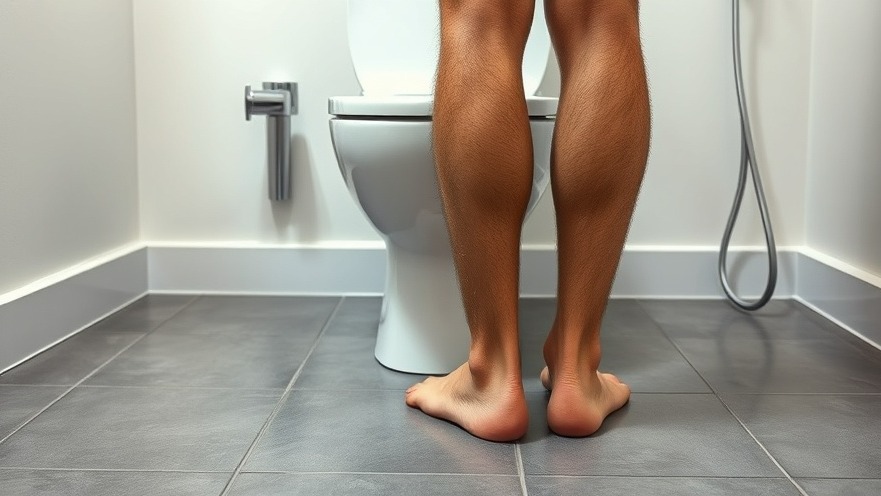
The Peeing Posture Debate: A Global Perspective
Around the world, discussions about whether men should sit or stand to urinate remain heated and divisive. In the United States, traditional norms lean toward standing, with a YouGov poll revealing that only 10% of American men regularly choose to sit. In contrast, countries like Germany flaunt a different narrative, with 40% of men opting to sit every time. Cultural habits like this often shape our practices, making it clear that potty preferences can vary significantly based on geography.
What Recent Studies Reveal About Peeing Positions
To get to the bottom of the debate, researchers conducted a study published in the journal Neurourology and Urodynamics, enlisting 52 healthy men aged 18 to 39 to analyze the differences between sitting and standing. Strikingly, the results indicated little to no significant difference in the volume or flow of urine produced in either position. While men reached peak flow slightly quicker when sitting down, this finding couldn't be broadly generalized as clinically relevant, primarily due to the influence of one participant's outlier results.
Dr. S. Adam Ramin, a urologist, confirms that for otherwise healthy young men, either position would yield an effective stream. This insight could be liberating for those who thought one method was superior to the other. Embracing a variety of positions may even enhance comfort and convenience, especially when feeling rushed.
Understanding Individual Needs: When to Sit or Stand
Age and health conditions appear to play a critical role in determining the best posture for urination. Older men or those with conditions such as an enlarged prostate could benefit from sitting down—allowing them to apply more abdominal force and more completely empty their bladders. As Dr. Boback Berookhim notes, this adjustment can be significant in achieving effective results.
The Hygiene Factor: Why Choice Matters
Hygiene also infiltrates the sit versus stand debate. Standing can often lead to splashes on toilet seats or floors, whereas sitting generally results in a cleaner restroom experience. This cleanliness factor may appeal particularly to health-conscious individuals and those striving to maintain good hygiene while navigating restrooms on their travels.
Key Takeaways for Digital Nomads
As digital nomads frequently use varied restroom facilities, it’s beneficial to reassess your urination preferences based on practicality and hygiene. Remember that personal comfort levels, especially in unfamiliar locations, can significantly influence your experience. Whether you’re standing over a public urinal or sitting in a more private stall, ensuring cleanliness could simplify your travels.
Ultimately, the choice to sit or stand isn’t merely about convention but personal comfort and health needs. Awareness of these variables can empower you to make more informed decisions while navigating your busy life on the road.




Write A Comment