


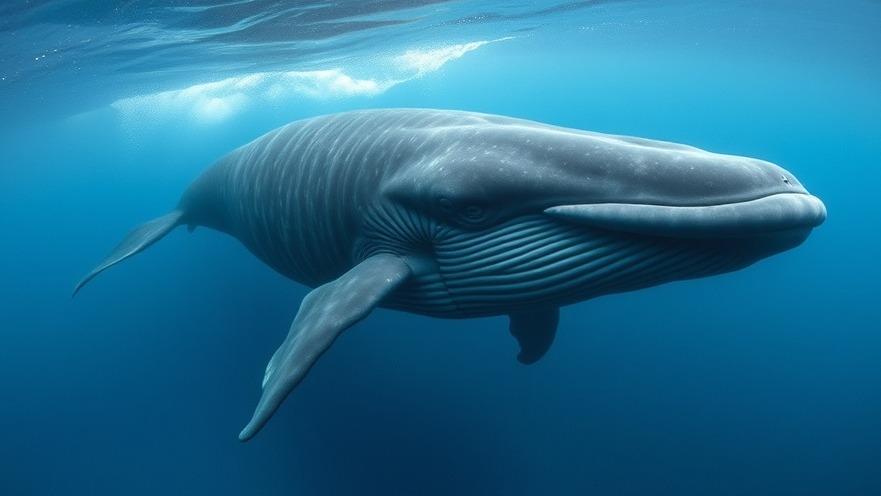
Whalefall: Fact or Fiction?
In Daniel Kraus's gripping novel Whalefall, a teenage scuba diver named Jay Gardiner finds himself in a mortal predicament when he becomes the latest prey of a sperm whale, aimed solely at a giant squid. This fantastical premise raises eyebrows and questions: Is it simply creative fiction, or does it draw from the fringes of reality? Incidents like the swallowings of a kayaker off the coast of Chile in 2025 and a lobster fisherman near Provincetown in 2021 who survived after being expelled reflect that while rare, such occurrences are not beyond the realm of possibility.
The Science Behind Survival
These real-life stories fuel curiosity about human survival in such bizarre encounters. What’s unique about a sperm whale that allows for these possibilities? Insights from experts like Ramsey Avery, the production designer for the film adaptation of Whalefall, reveal intriguing details about sperm whale anatomy. With a staggering four stomachs, each designed for different functions, the whale’s interior might be more accommodating than one expects. Interestingly, unlike their whale counterparts, sperm whales possess teeth not for chewing but rather for capturing prey without intense mastication, which suggests less physical damage for any potential swallowee.
The Challenges of Representing Whale Anatomy
Creating a believable whale stomach on screen is no simple task. Avery and his team dove deep into research, engaging with cetacean experts to visualize exactly what exists within these ocean giants. As he explored various dissection videos to get a clearer picture, he discovered that the shape, size, and color of a whale's digestive system could all play significant roles in a survival scenario. The way in which these whales suck in their food may serve as a benefit for a swallowed human.
Facing Reality and Common Misconceptions
It's essential for viewers to detach from the notion that whales are simply large, empty vessels. Instead, they are intricate living beings with complex biology. Avery's insights challenge the often whimsical depictions seen in pop culture, like Pinocchio's playful whale scene, and encourage a more realistic understanding of the consequences of such encounters.
Conclusion: What Can We Learn from Whalefall?
The premise of Whalefall serves not only as a thrilling narrative but also as a springboard for exploring anatomical realities and human vulnerability. Just as the journey for Gardiner evokes questions about survival, it beckons us to ponder our place within nature’s grand scheme. So, as you follow his underwater struggle, think about what we still need to uncover about our oceans. The next time you dive into the depths of the sea, consider the layers of life that may exist within.




Write A Comment